By Ivan Granitski
Benjamin Varon, a unique and thoroughly exceptional man, has passed away at the well-nigh biblical age of ninety-five.
In the course of more than twenty years, I had the privilege and high honour to be his friend, and in this capacity, I was able to converse with him almost on a daily basis about a wide range of subjects: from the social transformations taking place in present-day Bulgaria, through reflections on German philosophy, mainly Hegel, Feuerbach and Marx, to the grand pleasure of listening to Benji's analyses of the contemporary economic, philosophic and social thought of Europe. During the many hours of fascinating discussions, the idea came up of publishing several books containing Varon's theoretical studies.
Zakhari Stoyanov Publishing House offered three editions of the bookPaths presenting some of the thinker's analyses. Every new edition enriched and complemented the previous ones. This is how the bookCapitalism – Antagonist of Humankind made its appearance.
I
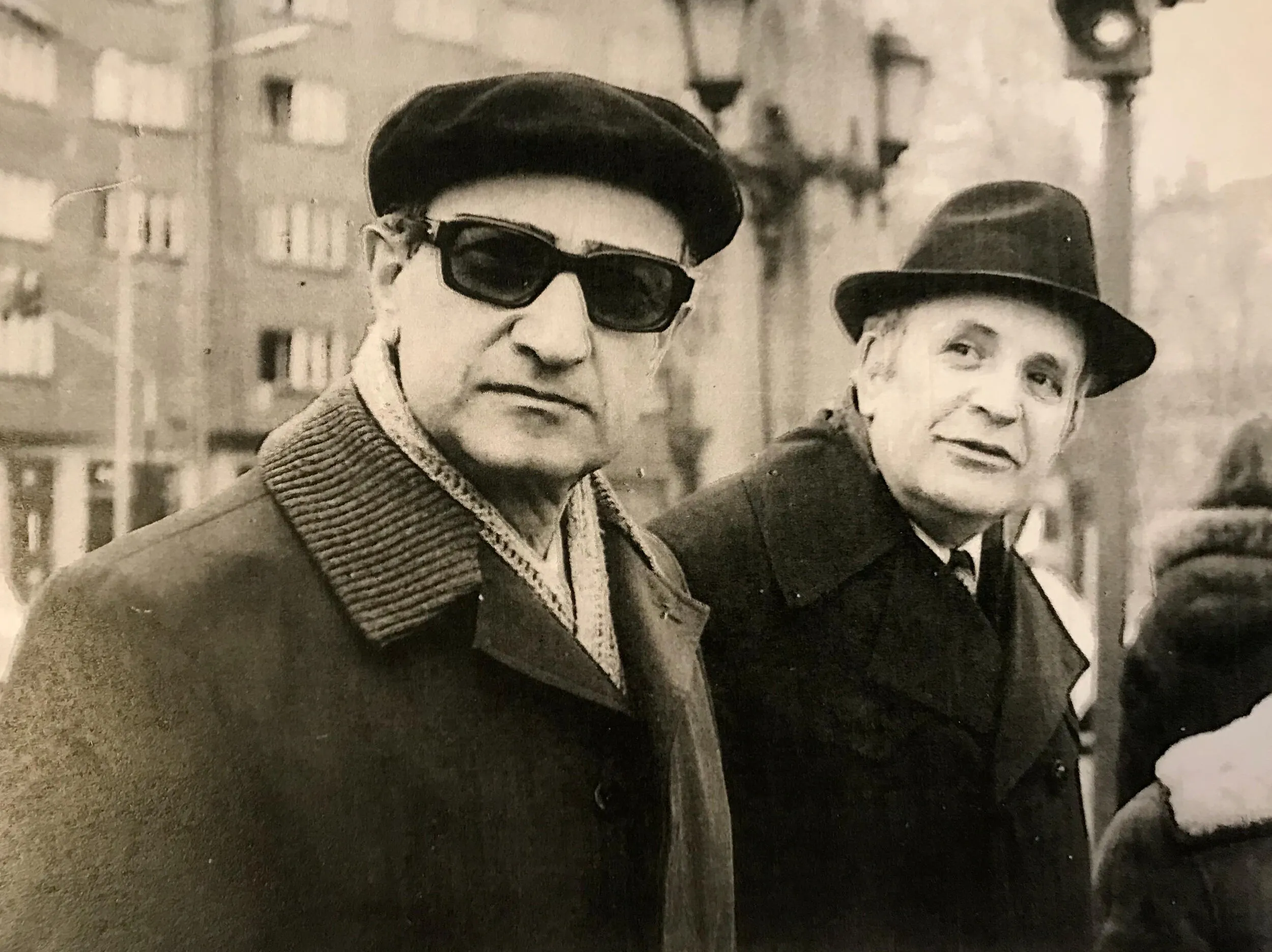
In the early nineties of the dramatic 20th century, Varon's name flashed like a meteor. The daily newspaper Duma started publishing his articles and they attracted like a magnet not only the intelligent readers but also the broader readership. Benjamin Varon's name was not completely new, but earlier on it was known only to a narrow circle. Duma and Stefan Prodev in particular rediscovered him at the outset of the so-called democratic transition.
On 3 June 1994, Duma published a stunning document titled "The Insight". This was the Open Letter of 1 June 1960 written by seven worthy socialists and addressed to the Central Committee of the Bulgarian Communist Party. In it, they criticised a number of defects of the totalitarian system.
Benjamin Varon was one of the intellectual motive forces of the Open Letter. His personality was an amalgam of high morality, strong civic consciousness, and intellectual depth. The courage and valour of that genuine knight of the socialist idea cost him almost forty years of hardship and suffering. However, adversity failed to crush his spirit and he remained faithful to his cause and ideas.
II
The times after 1990 marked the resurrection of Varon as a theorist and philosopher. The articles of that period summarized some of the author's most significant heuristic ideas. Here are some titles: "On Diagnosis and Something Else", "The Myth of Left Transition as a Political Drug", "Replacing the Capitalist Civilization", "On the Legal and Historical Illegitimacy of Capitalism", "The Third Way as a Way Out of the Left Domain", "Does Capitalism Have an Alternative", "Social Reformation or Degradation", "Issues of Social Liberalism", "Markets, the State, and the Left", "Globalization", "Capitalism is Hostile to Sustainable Development", "From Social Reformation to Radical Transformation of Capitalism", "Capitalism – Antagonist of Humankind".
Varon's studies offer a remarkably perceptive and often critical analysis of some classical Marxist ideas thereby enriching them. He examines in depth the characteristics of modern society and the macro- and microeconomic transformations taking place on a global scale and makes predictions for the future.
Varon demonstrates convincingly that Marx's paradigm of a capitalist society with a growing working class did not come true. On the contrary, the working class is decreasing in numbers, whereas its position in society and production, as well as the nature of labour, are undergoing radical transformations. From this vantage point, it is reasonable to aver that the working class as a historical agent assigned the role of changing capitalism is beginning to disappear. However, a new agent seems to be taking its place. What does this mean?
III
At the close of the 20th century, the changes taking place in the capitalist system brought about a situation in which capitalism turned from an antagonist of the working class to the antagonist of humankind. In this context, mass social movements have emerged all over the world which not only represent the new global civil society but also fundamentally reject the dominant capitalist system. These processes are taking place miles away from the traditional trade unions and the institutionalized leftist parties which are increasingly distancing themselves from the idea of radically reforming capitalism.
According to Benjamin Varon, under the new conditions, a radical transformation of capitalism does not necessarily require the liquidation of private property. Suffice it to set forth criteria that are not subordinate to the defining role of economic rationality. When the latter is assigned a subordinate role, then it could be assumed that capitalism has been overtaken, overcome in favour of a different society, even a different kind of civilization.
Varon launches a new, specifically Bulgarian, thesis of a radical transformation of the society of hired labour into one of cooperation of two kinds of capital: tangible capital and labour capital.
IV
Towards the close of the 20th century, it so happened that by the will of fate I became a witness of the sincere friendship among several extraordinary personalities. I was present at hundreds of meetings between Benjamin Varon, Stefan Prodev, and Valeri Petrov. Their conversations were always charged with heuristic energy. Varon laid out his revolutionary ideas with a Hegelian consistency and illustrated them with a vast array of legal, economic and philosophical arguments. His erudition deeply impressed his interlocutors and spurred them to start discussions which sometimes lasted until midnight.
At such moments, watching those free spirits soar, I was often reminded of the philosophers from the times of Socrates and Plato: the flight of their imagination and thought could never be stopped by temporal or historical restrictions.
V
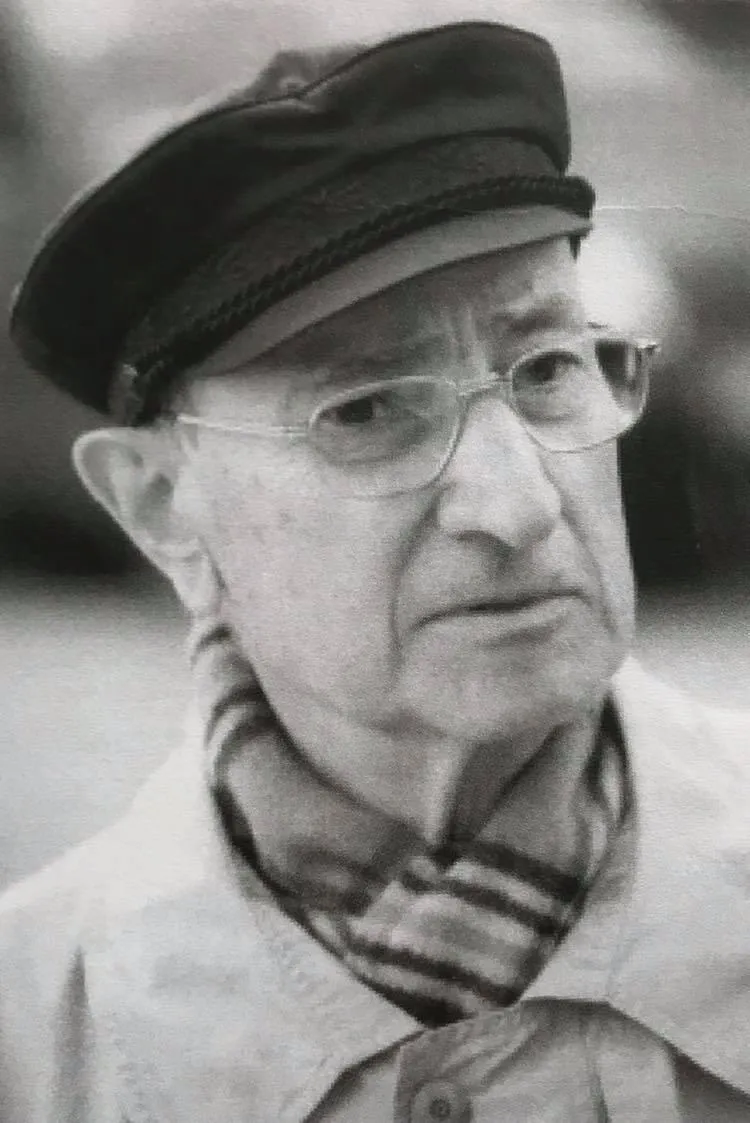
The social idea is very much alive. It is evolving and finding new inspirers and theorists. Benjamin Varon is doubtless the most brilliant and undisputed illustration of this. He never tired to journey into the recesses of theory and thought seeking to understand the changing social nature of the left ideas. Observing the life of that versatile man endowed with a Renaissance mind, we couldn't help admiring his moral stoicism and perseverance in pursuing noble causes and goals, his limitless theoretical creativity. He reminded us of the forefathers of the socialist idea, the larks whose emancipated spirit and nobleness left their imprint on centuries of history.
Ivan Granitski, Corresponding Member of the Bulgarian Academy of Sciences